
Step into the science museum, and the floor ripples with your footsteps as fish dart in alarm; wave your hand in the air, and virtual pages turn accordingly…
This is interactive projection efffect.These magical experiences are powered by the innovation of interactive projection .
As a standout in multimedia technology, interactive projection is revolutionizing the way commercial displays, education, and entertainment engage with audiences.
What is interactive projection?
Interactive projection, also known as multimedia interactive projection, transforms static images into dynamic, interactive content. It achieves this through projection technology and sensor devices. The system ensures real-time synchronization between the projected content and participants. With near-zero latency of less than 0.05 seconds, it delivers a truly seamless experience.
How does it work? Infrared sensors or video recorders first capture the target images. An image processing system then analyzes these images and generates precise motion data. Finally, the real-time interactive system integrates this data, creating dynamic interactions between participants and the screen.
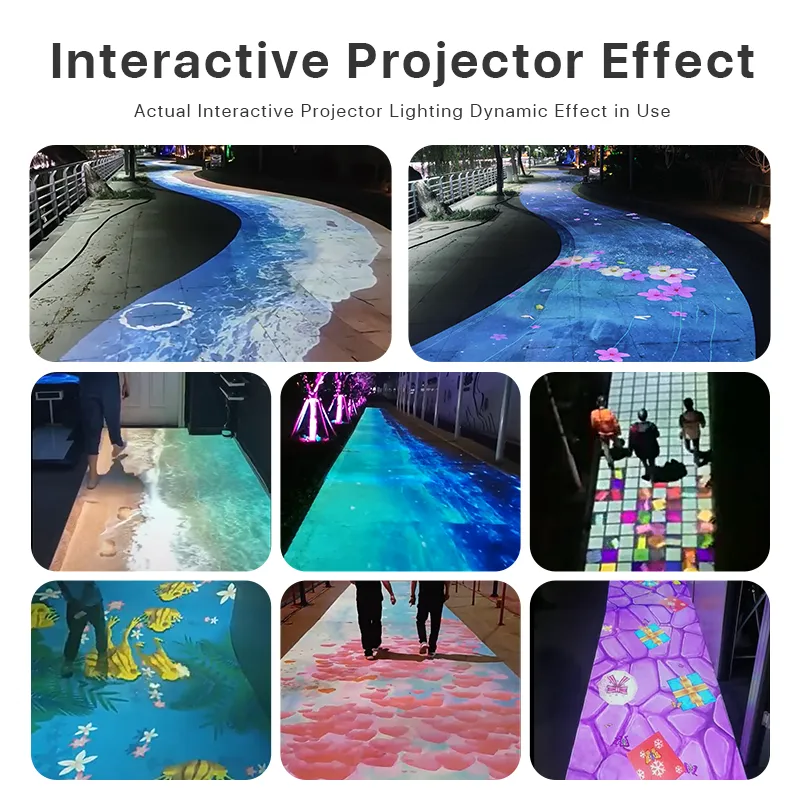
Various Forms of Interactive Projection
Interactive projection technology offers diverse presentation formats tailored to different application scenarios. The floor interactive projection transforms ordinary floor areas into dynamic, real-time interactive spaces. When viewers step into the projection zone, they can directly interact with the virtual environment using their feet, triggering various special effects.
Interactive wall projection: Creating a ‘dynamic wall’ where viewers can control the visuals with body movements, browse content of interest, and even doodle freely on the surface, breaking the size limitations of traditional touchscreens.
The Air Book Flipping System: A virtual book is displayed on the exhibition stand. When users reach forward to flip the page, the book actually turns with realistic sound effects, creating a breathtakingly lifelike dynamic experience.
Spherical interactive system: This technology employs projector splicing to project a massive globe. Through seamless integration of multiple projectors, it delivers an immersive visual experience.

Application Value of Interactive Projection
Interactive projection systems offer more than just technological demonstrations—they deliver significant practical value. In commercial settings, they serve as innovative advertising platforms. These systems deliver information through unique mediums and overcome the entertainment limitations of traditional static ads. They engage audiences with interactive experiences, creating impactful promotional effects.
In education, these systems gradually replace conventional chalkboard teaching methods. They significantly enhance instructional convenience and enrich content delivery. Teachers can now present complex concepts through dynamic, interactive visuals.
For retail spaces, interactive projection systems captivate customers with mesmerizing visual effects and dynamic animations. They attract shoppers to linger and interact with displays. This boosts the inherent appeal of entertainment and leisure while encouraging repeat purchases. Ultimately, businesses benefit from increased customer engagement and stronger brand loyalty.
The Market Prospect of Interactive Projection
In recent years, the interactive projection market in China has shown rapid development. In 2024, the market size of China’s interactive projection industry reached 15.86 billion yuan, a 16.3% increase compared to 2023. The education sector is the largest application market for interactive projection, accounting for 55.04% of the total market share. With the advancement of educational informatization, more and more schools are adopting interactive projection equipment to build smart classrooms. The commercial display and home entertainment sectors are also showing strong growth momentum. It is expected that by 2025, the market size of China’s interactive projection industry will expand to around 19.78 billion yuan. With the development of emerging technologies such as artificial intelligence and the Internet of Things, interactive projection will become more intelligent, achieving more convenient operation control through voice recognition and connecting more smart devices via the Internet of Things.
Future Trend of Interactive Projection Technology
In the future, interactive projection technology will prioritize natural and personalized experiences. AI integration will enable intelligent content adaptation based on audience behavior and emotions, delivering tailored viewing experiences. With the adoption of 5G and cloud computing, large-scale multi-user interactions will become feasible, supporting remote collaboration and competitive gaming, thus expanding the application boundaries of interactive projection. The deep integration of virtual reality (VR) and augmented reality (AR) will propel interactive projection toward mixed reality experiences, creating richer and more immersive interactive scenarios.
From shopping malls to museums, classrooms to theme parks, interactive projection technology is revolutionizing how we access information and engage with the world through its unique appeal. As a Shenzhen-based Aladdin Projection Light manufacturer, we recognize that technological innovation is the driving force behind industry advancement. We remain committed to exploring new possibilities in interactive projection technology, delivering more immersive visual experiences to consumers.