
Modern factories, warehouses, and heavy-duty workshops require reliable visual safety systems. Traditional warning methods, such as floor paint and safety tape, often fail in demanding industrial environments.
Industrial safety projector lights provide a more flexible solution. They create clear warning lines, hazard symbols, and restricted zones through high-visibility projection technology.
Unlike fixed signs, industrial warning projectors allow companies to customize safety messages for different working areas. They also reduce maintenance costs because projected markings do not wear away like painted lines.
However, the projector performance depends heavily on the installation method. A suitable mounting solution improves projection accuracy, equipment stability, and operational safety.
This guide introduces four common industrial safety projector mounting options. These include slide rail suspension, crane mounting, wall mounting, and floor stand installation. Each method fits different industrial applications.
1. Slide Rail Suspension: The Best Choice for High-Power Projectors
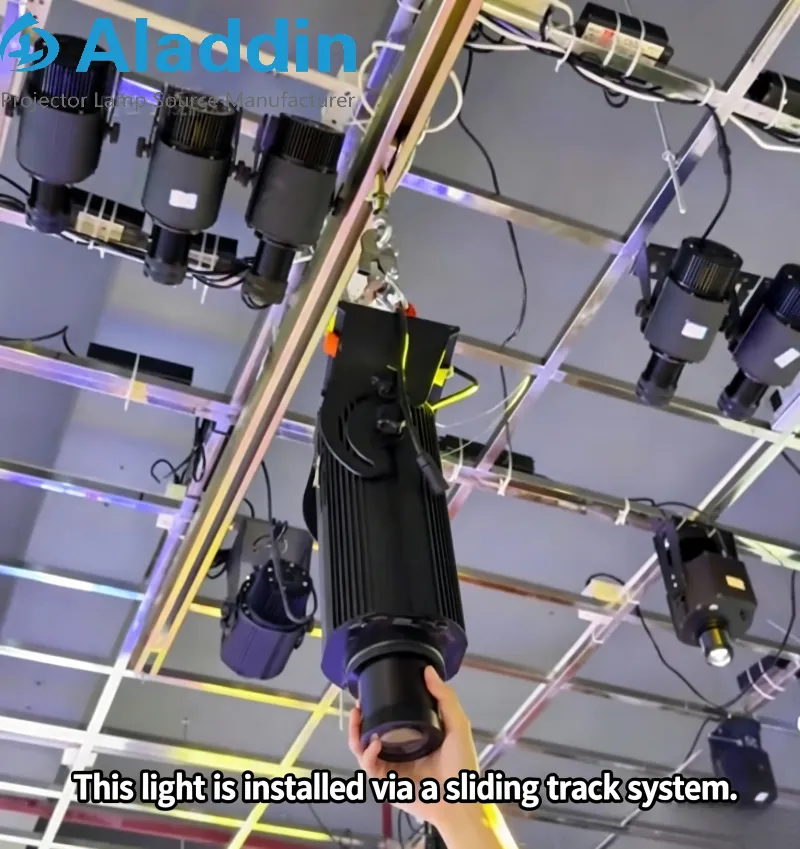
Slide rail suspension works well in large factories with high ceilings. It is especially suitable for 300W+ high-power industrial projectors.
Many manufacturing plants use this method because it provides excellent flexibility. The projector moves along the industrial rail system, which allows operators to adjust the projection position easily.
When production lines change, workers can relocate the projector without drilling new holes. This feature helps factories reduce installation time and maintenance costs.
Ceiling suspension also creates a clear projection path. The projector stays above machines, storage racks, and working areas. Therefore, obstacles rarely block the projected safety patterns.
For heavy industrial environments, stability remains a key requirement. Strong metal brackets and reinforced rail systems support high-power equipment during long-term operation.
Fall-Prevention Requirements for Suspended Projectors
Safety protection becomes critical when companies install projectors at high positions.
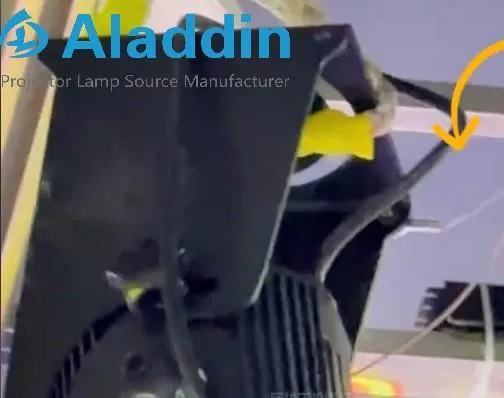
Professional installations should include a secondary safety cable. The cable connects the projector housing with the main support structure.
This design prevents accidental drops if screws become loose after long-term vibration.
Industrial facilities should inspect safety cables regularly. They should also check brackets, bolts, and connection points during routine maintenance.
2. Overhead Crane Mounting: Improving Lifting Area Safety
Overhead cranes create complex safety challenges in factories. Workers often move around lifting areas, while cranes transport heavy materials above them.
A crane safety projection light creates a visible warning zone around the lifting area. It helps workers recognize dangerous zones before entering them.
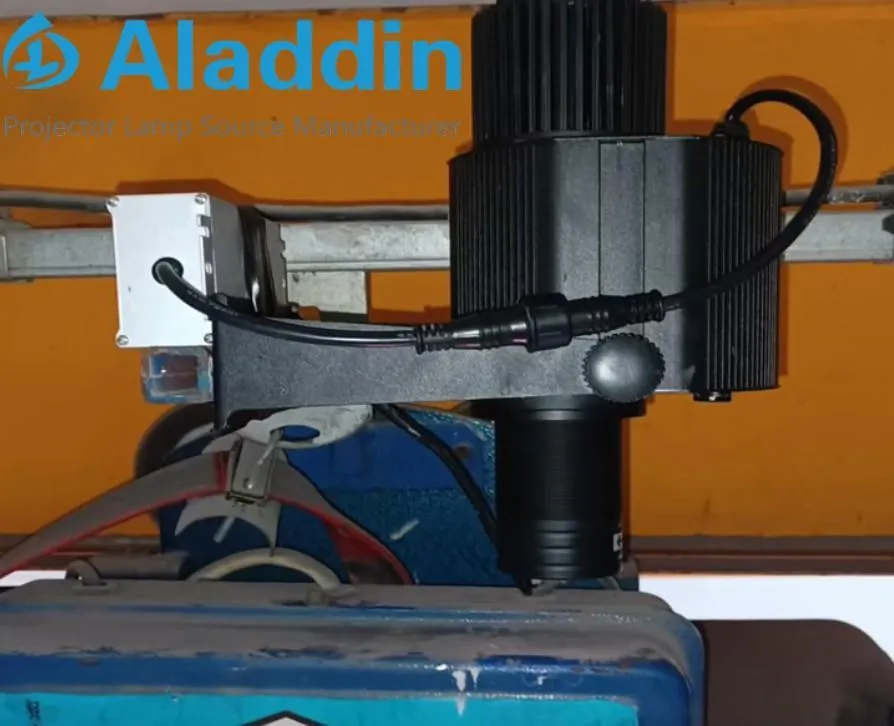
For single-hoist cranes, technicians usually mount the projector under the trolley structure. The projector then projects a clear boundary around the hook area.
Because cranes experience constant movement and vibration, installers should use anti-vibration accessories. These components improve stability and protect the projector from mechanical impact.
Multi-Hoist Crane Safety Projection Solutions
Large factories often operate cranes with multiple lifting points. These environments require more advanced projection solutions.
Multiple projectors can create separate safety zones for different hooks. Workers can quickly identify each hazard area during complex lifting operations.
This solution works especially well in steel plants, shipyards, and heavy machinery workshops.
By combining crane movement with visual warning technology, companies can improve workplace awareness and reduce accident risks.
3. Wall Mounting: A Practical Solution for Limited Ceiling Space
Some facilities cannot install ceiling-mounted systems because of structural limitations. In these cases, wall mounting provides an efficient alternative.
Wall-mounted industrial projectors work well in:
- Workshop entrances
- Machine operation areas
- Warehouse aisles
- Equipment protection zones
This method uses strong brackets fixed to walls or concrete columns. It requires less structural modification compared with ceiling installation.
Another advantage comes from easy maintenance. Technicians can access the projector more conveniently for cleaning, adjustment, and replacement.
Adjustable brackets also allow precise projection direction. Operators can modify the angle according to different safety requirements.
However, installers should avoid locations near forklift routes. Mechanical impacts may damage the projector and affect operation.
4. Floor Stand Mounting: Flexible Solution for Temporary Areas
Floor stand mounting provides maximum mobility for changing work environments.
Factories often use this method in temporary maintenance areas, outdoor yards, and short-term construction zones.
Unlike fixed mounting systems, floor stands require no drilling or permanent installation. Workers can move the projector whenever the working area changes.
A weighted metal base keeps the projector stable during operation. At the same time, operators can relocate the system quickly.
However, floor stands occupy valuable floor space. Therefore, companies should avoid using them in busy transportation routes.
This solution works best for temporary safety zones and localized equipment protection.
Comparison of Industrial Safety Projector Mounting Methods
Different working environments require different installation solutions.
Slide rail suspension provides excellent flexibility for high-ceiling factories. Crane mounting focuses on dynamic lifting safety. Wall mounting fits compact spaces with limited ceiling access. Floor stands offer the highest mobility for temporary applications.
Companies should consider several factors before selecting a mounting method. These factors include installation height, projection distance, working environment, and maintenance requirements.
Essential Installation and Maintenance Practices
A reliable industrial safety projector system requires proper installation and regular inspection.
First, companies should always install secondary safety cables for elevated projectors. These cables provide additional protection against unexpected equipment failure.
Second, technicians should tighten all adjustment components after installation. Loose parts may affect projection accuracy during continuous operation.
Third, maintenance teams should inspect brackets, screws, and safety cables regularly. Early detection of problems prevents equipment failure.
For outdoor or harsh industrial environments, companies should select projectors with suitable protection ratings. IP65 or higher protection helps equipment operate reliably in dusty and humid conditions.
Industrial Safety Standards and Compliance
Industrial safety projection systems should follow recognized safety standards.
OSHA 1910.145 highlights the importance of clear workplace warning signs. Industrial projectors provide visible safety indicators without the limitations of traditional markings.
ISO 3864-1 defines requirements for safety colors and graphical symbols. High-quality projection systems meet these requirements through strong contrast and clear visual communication.
Conclusion: Building Safer Industrial Workplaces with Proper Installation
The right mounting method improves both safety performance and equipment reliability.
Factories should select installation solutions based on their working conditions and operational needs.
Whether the application involves cranes, production lines, warehouses, or temporary work areas, a properly installed industrial safety projector creates a safer environment.
By combining suitable mounting methods, fall-prevention measures, and regular maintenance, companies can improve workplace safety and achieve long-term operational efficiency.