
1. Background: A High-Risk Logistics Center
Zebra crossing projection lights are not always the first solution that comes to mind for logistics safety. However, in this case, they became the core of the solution.
To begin with, the customer is the largest pharmaceutical manufacturer in Chile. Specifically, their logistics center handles massive daily volumes of inbound and outbound goods. As a result, forklifts run continuously, while pickers and inspection personnel move through the same areas.
For pharmaceutical companies, GMP (Good Manufacturing Practice) focuses heavily on production environments — however, logistics zones are often overlooked. In this particular case, the mixing of people and forklifts created a clear safety risk that needed immediate attention.

2. The Real Problem: Worn-Out Stickers and Dangerous Blind Spots
A zebra crossing projection light offers something that traditional stickers cannot: durability and dynamic visibility. Initially, the customer’s technician shared hand-drawn sketches and on-site photos. At that time, the existing safety measure at multiple turns was nothing more than adhesive zebra crossing stickers.
To be more specific, the problems were obvious:
- First, frequent forklift turns created blind spots.
- Second, pedestrians and forklifts constantly crossed paths.
- Third, the stickers wore out within months under heavy traffic.
Consequently, once the stickers failed, there was effectively no warning system left. Therefore, the customer needed something durable, highly visible, and proactive — in other words, a zebra crossing projection light instead of another disposable solution.
3. The Long Wait: Two Months of Silence
After receiving the initial request, JOJO worked closely with the customer over WeChat, analyzing the sketches and site images. Then, a detailed safety proposal and quotation were submitted. Following that, the customer took the proposal to internal decision-makers.
And then came the silence — two full months of waiting.
During this period, JOJO followed up regularly. However, the reply was almost always the same:
“The plan is still under review. No decision yet.”
As JOJO understood, this wasn’t rejection. In fact, it was the real pace of transnational approvals in large pharmaceutical companies. That is why JOJO stayed patient, professional, and present throughout the entire waiting period.
4. The Breakthrough: Project Approved, Samples Needed Immediately
Then, months later, a sudden message arrived:
“The project is approved. We need samples immediately.”
Clearly, there was no time for slow reactions. For this reason, JOJO responded at once. But interestingly, instead of rushing to ship generic samples, she did something critical — specifically, she asked the right technical questions first.
5. Why Angle and Height Matter More Than You Think
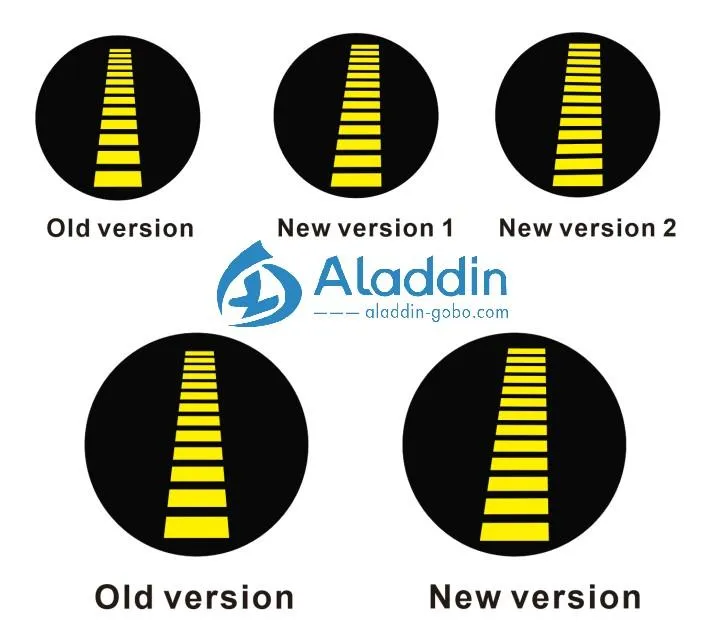
At the heart of this solution, the core product was the zebra crossing projection light — namely, an optical warning system that projects a bright, clear crosswalk pattern onto the ground.
To ensure accuracy, JOJO asked for the following details:
- Mounting height
- Installation angle
- Distance between the light and the target area
So, why are these parameters so critical?
The reason is simple: a projection light is not a normal floodlight. In fact, if the angle or height is even slightly off, the zebra crossing pattern will become stretched, distorted, or fail to align with the ground. On the other hand, only with precise angle and height can the pattern remain square, sharp, and fully fitted to the intended area.
As you can see, this is a small detail that makes or breaks the entire installation.
6. Two Operating Modes for Different Risk Levels
When designing for the logistics center’s varying risk zones, JOJO proposed two types of zebra crossing projection lights:
| Type | Mode of Operation | Best Use Case |
|---|---|---|
| Sensor-activated | Zebra crossing appears only when a forklift enters the zone | High-risk corners — reduces light pollution while focusing attention |
| Always-on | Zebra crossing stays lit continuously | Main aisle intersections requiring constant warning |
As a result, the customer immediately saw the value: namely, no over-engineering, no one-size-fits-all. Instead, it was just a tailored safety layout.
7. From Two Samples to Full Deployment
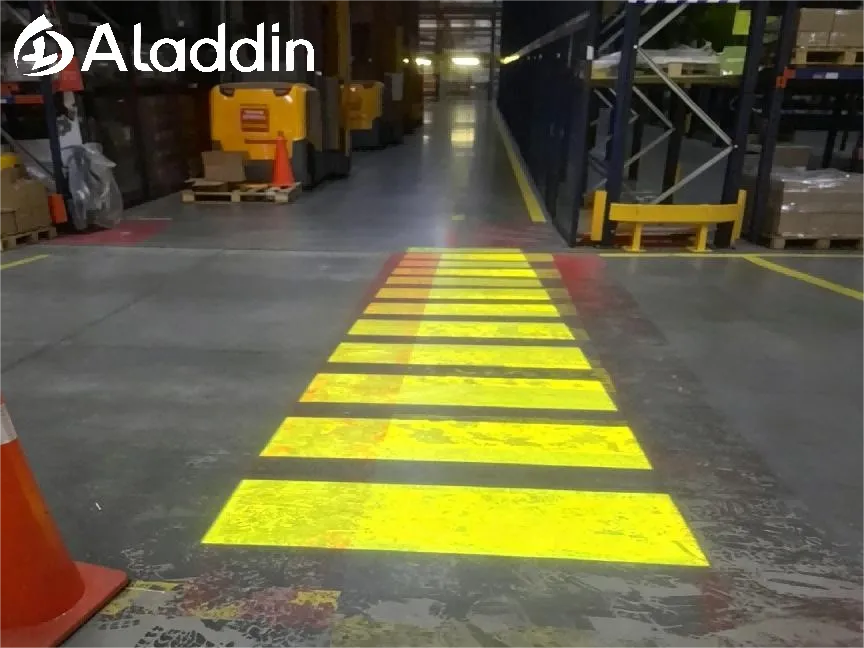
After finalizing the design, two samples were shipped to Chile and installed on-site.
To our satisfaction, the results met every expectation:
- First of all, the zebra crossing patterns were crisp and distortion-free.
- Secondly, blind spots at turns were effectively covered.
- Moreover, pedestrians began yielding proactively.
- Finally, forklift operators slowed down in advance.
Because of these positive outcomes, the customer confirmed the next step: full deployment of zebra crossing projection lights across the entire logistics center.
8. Key Takeaways for Industrial Safety Sales
In summary, here are three key lessons from this project:
✅ Long-term follow-up builds trust, not annoyance
Two months of silence doesn’t mean a dead project. In the end, JOJO’s patience paid off when the opportunity finally opened.
✅ Speed matters most when the customer is ready
Notably, the customer reached out to JOJO immediately after approval — because she had stayed “in the room” the whole time.
✅ Technical precision wins projects
Angle, height, mounting details — indeed, these seemingly small parameters determine whether a safety solution actually works on the ground.