
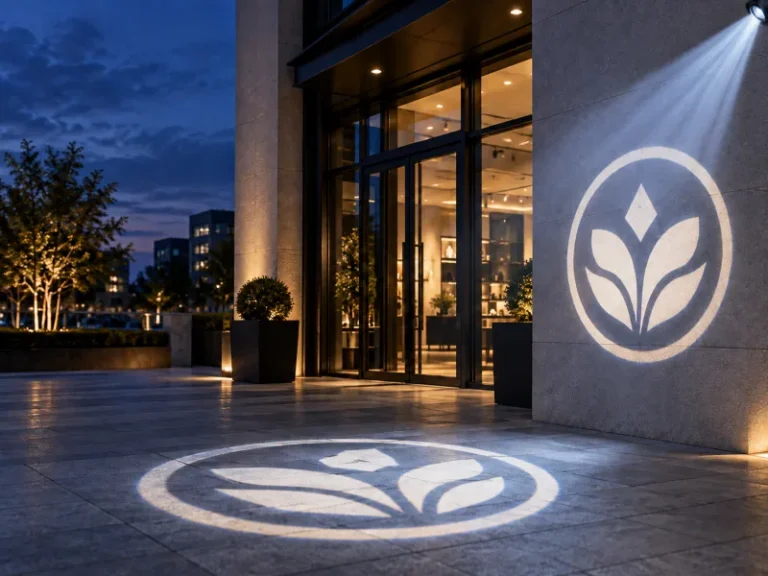
A logo advertising projector can turn an empty floor, wall, or building surface into a visible branding space. It helps businesses display logos, welcome messages, promotional graphics, and event information.
Unlike printed signs, projected content can change without altering the installation surface. The same projector can support several campaigns by replacing the GOBO slide.
However, suitable equipment depends on more than wattage. Projection distance, ambient light, surface color, image size, and operating time all affect the result.
This guide explains the main factors buyers should consider before choosing a commercial projection system.In fact, this article is more of a practical guide to avoid pitfalls. It can help you steer clear of unnecessary losses when selecting a suitable supplier for projection lamps. While it won’t turn you into an instant expert in the projection‑lamp industry, it will quickly get you out of the beginner stage and help you kick‑start your projection‑lamp business.
How Logo Projection Works
A logo projector uses an LED source, a GOBO slide, and an optical lens. Light passes through the slide before the lens enlarges the image.
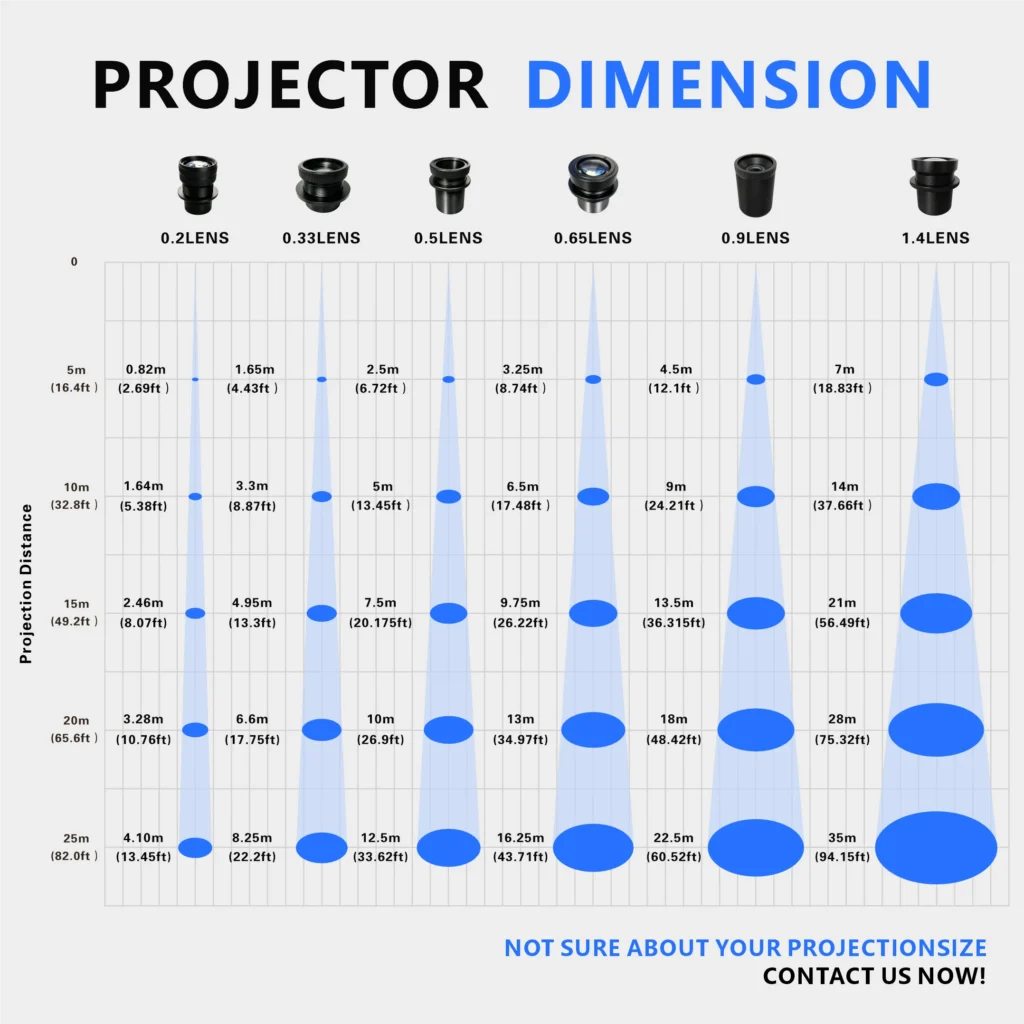
The LED light source is the most critical component. Shenzhen Aladdin adopts OSRAM LED chips from Germany to ensure reliable quality. Patterns are usually engraved on the gobos, and these patterns are the key that determines projected content. Next comes the lens. Different lenses work with different projection‑ratio values. The commonly‑used value is 0.33. At a distance of 1 meter, a 0.33‑ratio lens can project an image of 1 × 0.33 = 33 cm in width. Besides 0.33, we also offer lenses with ratios of 0.2, 0.65 ,1 and 1.4.
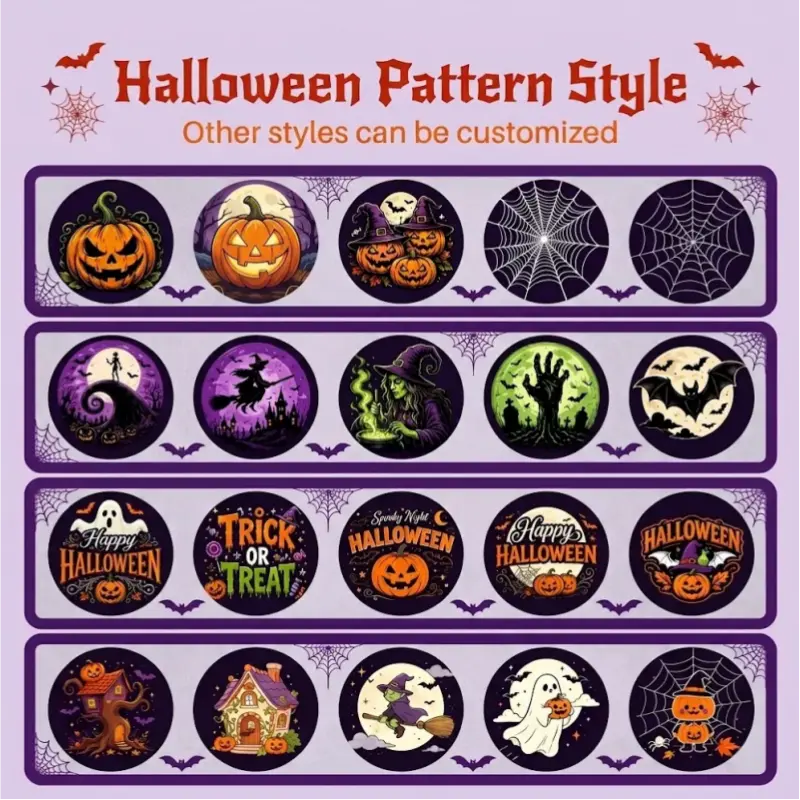
The GOBO contains the artwork that appears on the projection surface. It may include a company logo, text, symbol, decorative pattern, or promotional message.
A standard GOBO projector usually supports replaceable slides. Businesses can therefore update campaigns without buying another complete projector.Gobos can be classified by color into single‑color, dual‑color and full‑color types. It is worth noting two special colors: black and white. The black areas refer to the un‑engraved sections of the gobo. Since light cannot pass through these parts, they appear black in projection. The white areas are fully hollowed‑out sections, where the light beam passes straight through to produce a white output.
The lens controls image size and projection distance. Short-distance lenses create larger images within limited spaces. Long-distance lenses work better for elevated or remote mounting positions.
Where Can Businesses Use Logo Projectors?
Logo projection works across retail, hospitality, events, exhibitions, and outdoor advertising projects.
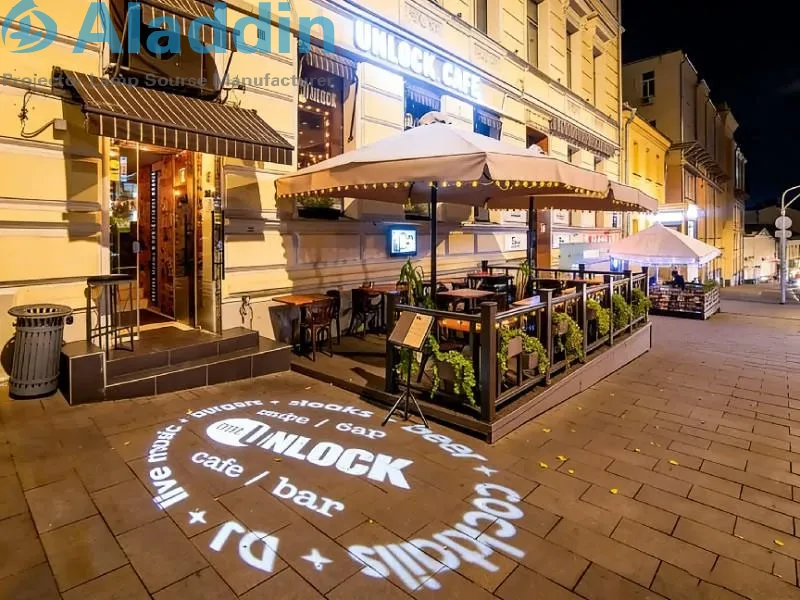
Retail stores often project logos near entrances or promotional displays. Restaurants can show welcome messages on sidewalks or interior walls. Hotels may add branded images to lobbies, gardens, and event spaces.
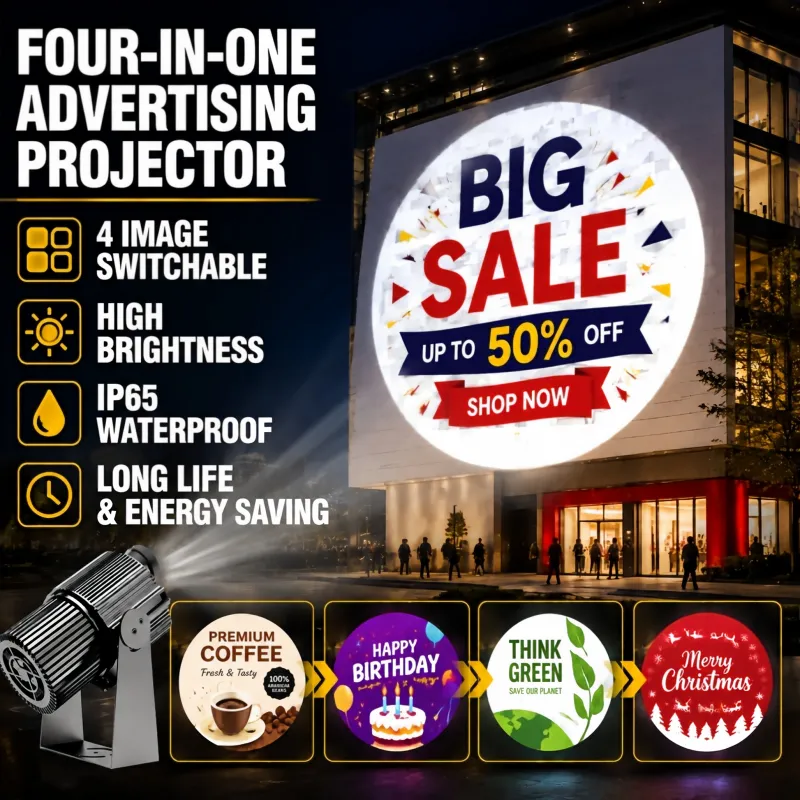
Exhibition contractors use projection lights to strengthen booth visibility without adding heavy signs. Event planners can also display company names, sponsors, monograms, or directional graphics.
Businesses planning these applications can compare dedicated advertising projector options.For this application, if you want to display more corporate sign graphics, you may consider our multi‑image rotating gobo projector. This series offers 4‑image, 6‑image and 8‑image projection lamps for your selection.
Indoor and Outdoor Models
Indoor installations usually face stable temperatures and controlled lighting. These conditions allow lower-power models to produce clear images.
A compact logo projector can work well in shops, restaurants, reception areas, and exhibition booths. Installers should still measure the distance before selecting a lens.For indoor‑use projection lamps, apart from the standard models, we also offer recessed‑mount projection lights. They can hide the fixture to the greatest extent and maintain a neat aesthetic appearance.
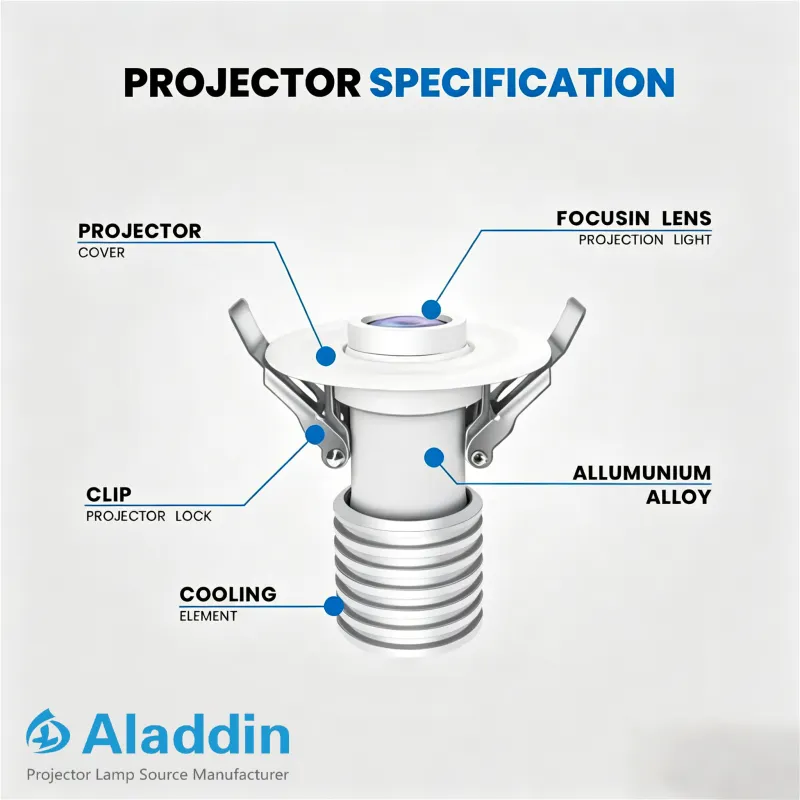
Outdoor projects require stronger weather protection. Rain, dust, temperature changes, and sunlight can affect the projector and visible result.
A purpose-built outdoor GOBO projector should include a sealed housing and reliable heat dissipation. Cable connections also need protection from water.
The International Electrotechnical Commission explains how IP ratings classify protection against dust and liquids. This classification helps buyers evaluate outdoor enclosures more accurately.
IP65 suits many general outdoor applications. More demanding environments may require higher protection or additional corrosion resistance.
How Much Power Does the Project Need?
There is no single wattage that works for every installation. More power can improve brightness, but it cannot correct an unsuitable lens or poor mounting position.
Indoor projects with controlled lighting often need less power. Outdoor walls, large images, and long distances usually require stronger models.
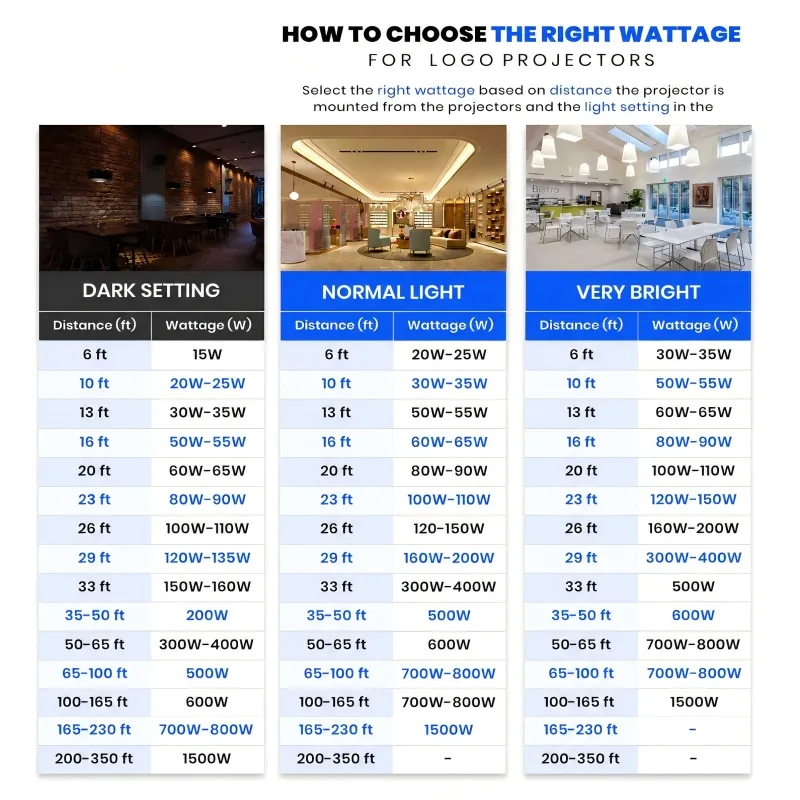
Before selecting wattage, record these project details:
- Projection distance
- Required image diameter
- Indoor or outdoor location
- Surface color and material
- Nearby lighting conditions
- Daily operating hours
- Mounting height and angle
A white or light-colored surface normally reflects more light. Dark walls absorb more brightness and may require additional power.
Strong streetlights or storefront lighting can also reduce image contrast. Testing the projection during actual operating hours provides the most reliable assessment.
Selecting the Correct Lens
Lens selection directly affects image coverage. A projector with high power can still produce an unsuitable result when paired with the wrong lens.
A wide-angle lens creates a larger image from a shorter distance. A narrow-angle lens suits longer distances or smaller projection areas.
Installers should avoid extreme projection angles. A steep angle can stretch the artwork and create visible distortion.
For accurate selection, buyers should provide the mounting distance and required image size. A supplier can then recommend a suitable lens ratio.
Choosing the Right GOBO Material
Regarding the selection of gobos, I have previously written two related articles. Feel free to click to view them.
《How to Choose the Right Gobo for a Projector? Complete Guide to Gobo Materials, Types, and Applications》and《Glass Gobo vs Quartz Gobo: How to Choose the Right Gobo Plate for Projection?》
GOBO slides commonly use film, metal, glass, or quartz. Each material supports different artwork and operating conditions.
Film offers an economical option for lower-power indoor applications. Metal works well for simple, single-color graphics. However, small areas may need connecting bridges.
Glass provides better detail for complex logos, small text, and multiple colors. A glass GOBO also tolerates higher temperatures and longer operating periods.
Businesses can review available GOBO slides and accessories before confirming the artwork.
High-resolution vector files usually create the best production result. Suitable formats include AI, SVG, CDR, PDF, or high-resolution PNG.
Very thin lines and small text may disappear after projection. A design check should therefore take place before production begins.
Fixed and Rotating Images
A fixed image suits permanent branding, entrance signs, and directional graphics. It provides a stable display that visitors can read easily.
Rotating images can attract more attention during events or retail promotions. The movement should remain slow enough to protect logo clarity.
Some commercial models also support multiple slides or automatic image switching. These features help businesses run several promotions from one installation.
However, additional movement is not always necessary. A clear and well-positioned fixed logo often provides stronger brand recognition.
Large Walls and Building Facades
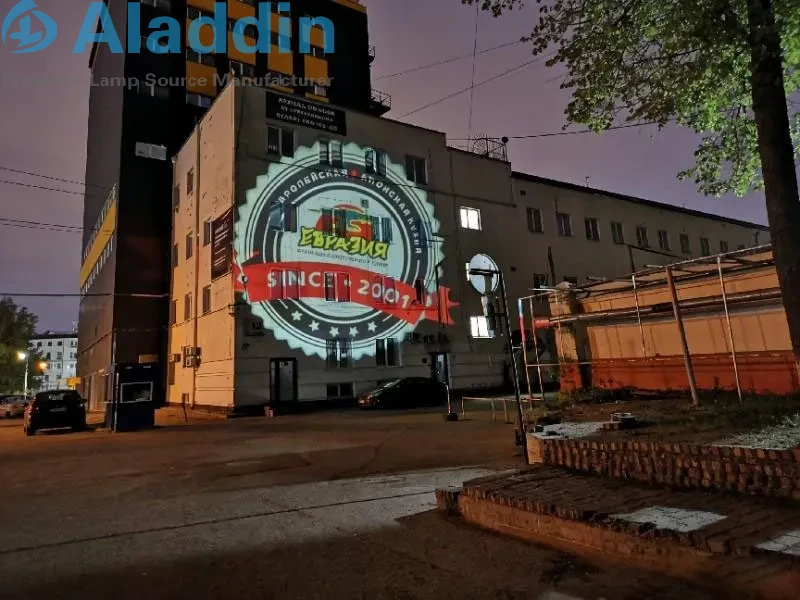
Building projection requires more planning than indoor logo display. Longer distances and larger images increase power and lens requirements.
Ambient lighting around the building must also be considered. A bright facade needs stronger output than a dark wall in a controlled area.
Dedicated building projection lights support commercial buildings, hotels, shopping centers, and outdoor events.
Large surfaces may require several projectors. Their positions should provide consistent brightness without overlapping the images incorrectly.
Maintenance access also matters. Installers should avoid positions that make lens cleaning or focus adjustment difficult.
Customization for Commercial Buyers
Many B2B projects need more than a standard projector. Buyers may require custom artwork, housing colors, packaging, labels, controls, or mounting brackets.
An OEM project should begin with clear technical information. The supplier needs the installation environment, projection distance, image size, and artwork file.
Aladdin provides OEM and ODM projection lighting support for custom GOBO production, lens selection, product development, and packaging.
A preliminary rendering can confirm logo proportions and colors. Project testing can then verify brightness, focus, and image size.
Businesses should also confirm their rights to use submitted logos. The World Intellectual Property Organization notes that logos and symbols may receive trademark protection.
Installation and Electrical Safety
The mounting structure must support the projector securely. Installers should consider wind, vibration, temperature, and maintenance access.
Outdoor cable connections need suitable waterproof treatment. Power supplies should match the local voltage and installation environment.
OSHA provides requirements concerning the safe use of cord-connected electrical equipment. Local electrical codes may add further requirements.
After installation, adjust the focus under real lighting conditions. Check the complete image for distortion, blurred edges, and blocked areas.
Routine maintenance should include lens cleaning, cable inspection, and bracket checks. Dust on the lens can gradually reduce image clarity.
Common Purchasing Mistakes
One common mistake involves choosing power before measuring the site. Wattage alone does not determine image size or quality.
Another issue comes from using indoor equipment outdoors. An unprotected housing can suffer water damage and unstable performance.
Incorrect artwork also causes poor results. Small text, thin lines, and low-resolution images may lose clarity during projection.
Some buyers select a lens without confirming distance. This can create an image that is too small or too large.
Finally, placing the projector beside strong lighting can weaken contrast. A site assessment helps prevent these problems before installation.
Questions to Answer Before Ordering
Prepare the following information before requesting a quotation:
- Where will the projector be installed?
- What is the projection distance?
- How large should the image appear?
- What color and material is the surface?
- Will the system operate indoors or outdoors?
- How bright is the surrounding environment?
- How many hours will it run each day?
- Does the image need to rotate or change?
- Which voltage is available at the site?
- Is custom packaging or branding required?
These details help the manufacturer recommend a practical configuration. They also reduce delays during production and installation.
You can review the projection lighting FAQ for additional purchasing and customization information.
Frequently Asked Questions
Can a logo advertising projector work during daylight?
Direct sunlight usually reduces image visibility significantly. Shaded areas and evening operation provide better results.
Can one projector display different logos?
Yes. Users can replace the GOBO slide. Some models also support multiple slides or automatic switching.
Is a glass GOBO better than a metal GOBO?
Glass suits detailed and multicolor artwork. Metal works well for simple single-color designs.
How long does a projector last?
Service life depends on LED quality, cooling, operating hours, and maintenance. Proper heat dissipation supports stable long-term operation.
Can a projector display a logo on the floor?
Yes. Ceiling or wall mounting can direct the image toward a floor. The mounting angle should minimize distortion.
Are logo projectors suitable for weddings and events?
Yes. They can display names, monograms, dates, sponsor logos, and decorative patterns. Explore wedding and event projectors for relevant options.
Conclusion
A logo advertising projector offers a flexible way to display branding without permanent signs. It supports retail spaces, events, hotels, exhibitions, and outdoor projects.
The right solution depends on distance, image size, ambient light, lens ratio, and environmental protection. Accurate site information matters more than selecting power alone.
For a tailored recommendation, send your artwork and project measurements through the Aladdin contact page.
