
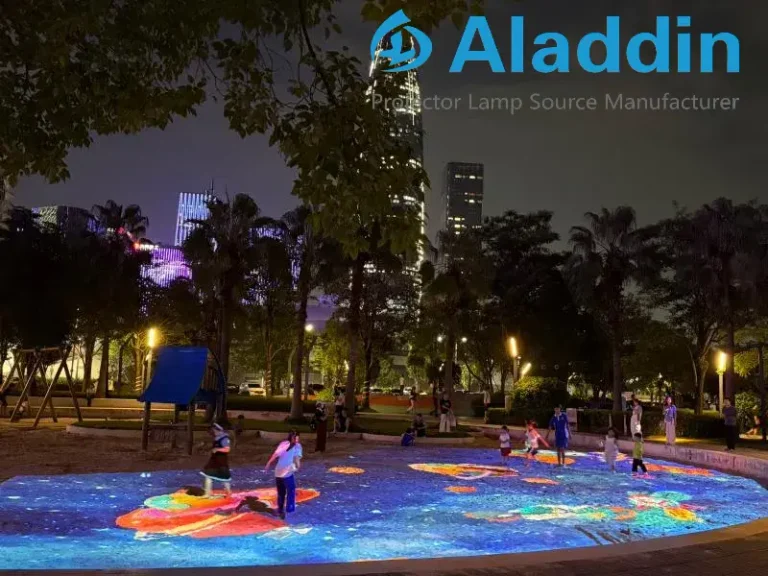
A flower field appears beneath your feet as you walk.
Ripples spread across the ground when someone steps forward.
Digital fish move away as visitors approach them.
This kind of interactive lighting creates a stronger connection between people and outdoor spaces.
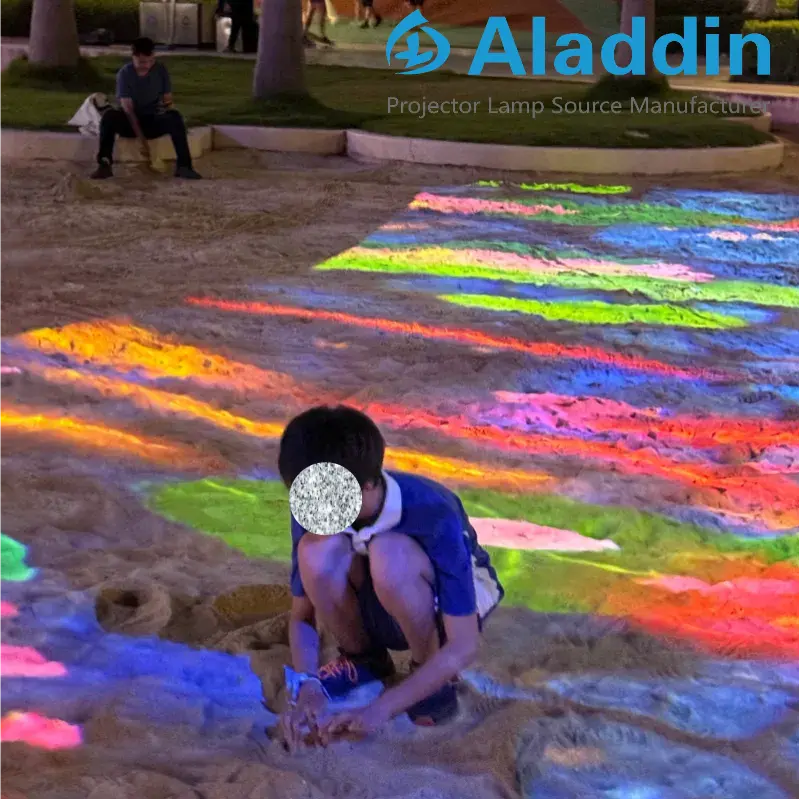
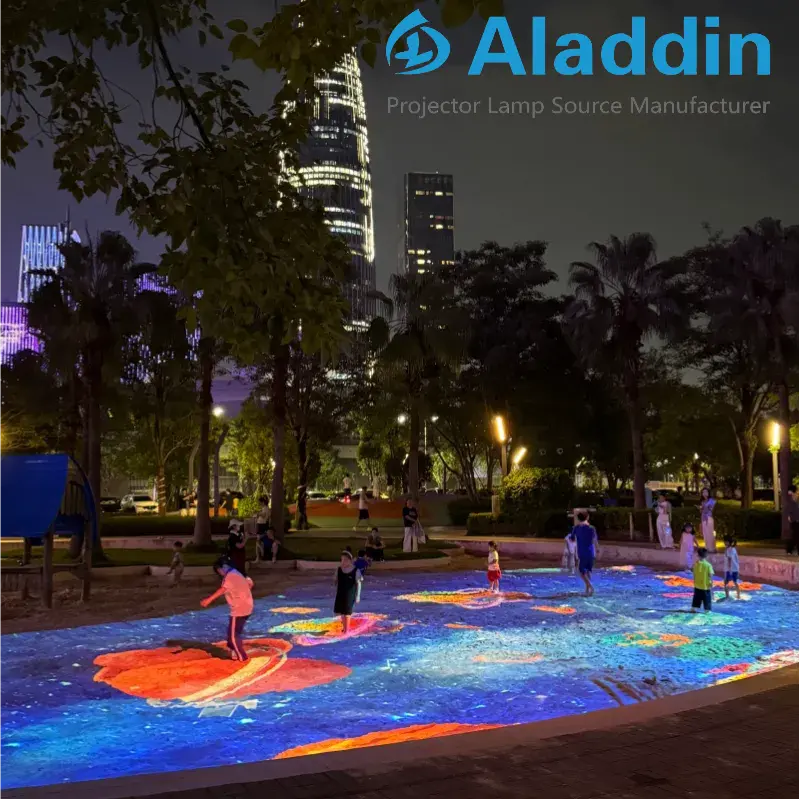
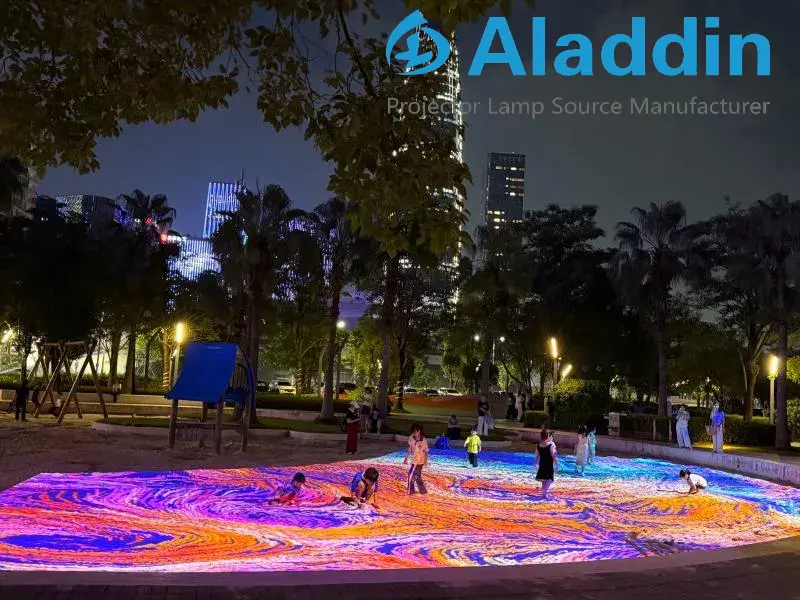
The interactive projection experience at Shenzhen Talent Park shows this concept clearly.
Instead of simply illuminating the ground, projected visuals respond to visitor movement.
Such effects can make ordinary outdoor areas feel more dynamic after dark.
Walkways, plazas, open lawns, and landscape spaces can become interactive visual zones.
For outdoor lighting contractors, this approach offers another way to upgrade existing projects.
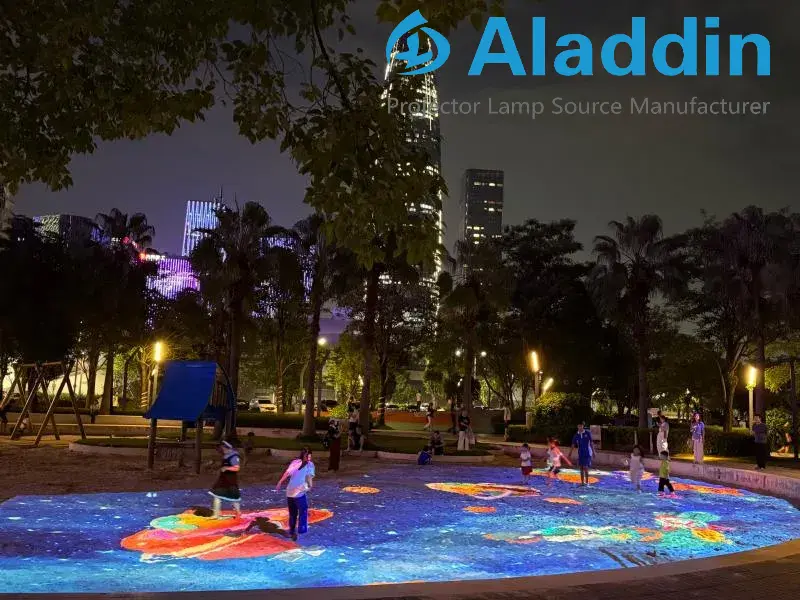
What Makes Shenzhen Talent Park So Engaging?
Traditional outdoor lighting mainly focuses on brightness, atmosphere, and visual decoration.
Interactive projection adds another layer by allowing visitors to influence what they see.
A person walks across the projection area and triggers a visual response.
Flowers can appear, water can ripple, or digital objects can move away.
These effects make people curious about what will happen next.
The experience therefore becomes more than decorative lighting.
Visitors become part of the visual environment through their own movements.
That sense of participation can increase engagement within an outdoor space.
For project contractors, the concept is also relatively flexible.
Existing ground surfaces can become projection areas without major landscape reconstruction.
The installation can therefore complement an existing outdoor lighting design.
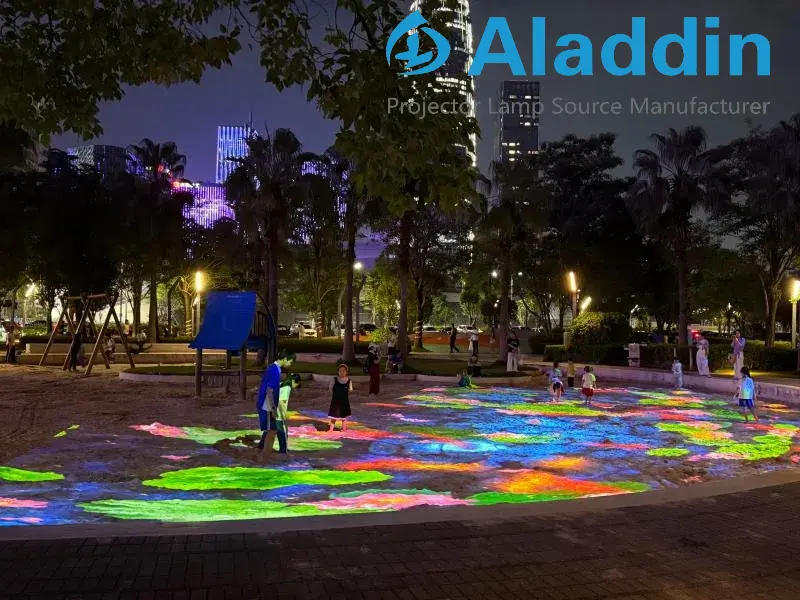
Why Interactive Projection Fits Outdoor Lighting Projects
Outdoor lighting projects often need more than conventional fixtures.
Project owners may want distinctive visual features without extensive structural changes.
Interactive projection can provide an additional experience within an existing landscape.
Large plazas offer enough space for projection and visitor movement.
Walkways can create natural paths through interactive visual scenes.
Open landscape areas can support larger effects and wider projection coverage.
Another advantage comes from content flexibility.
The same projection system can support different visual themes over time.
Seasonal effects can also refresh the appearance of an outdoor installation.
This flexibility can be useful for landscape lighting contractors and system integrators.
Project teams can combine projection with existing decorative and architectural lighting.
The result can create several visual layers within one outdoor environment.

Bringing the Shenzhen Talent Park Concept to Your Project
The goal does not need to be an exact copy of Shenzhen Talent Park.
Instead, contractors can adapt the interaction concept to their project conditions.
A park walkway could use blooming flowers as the main visual theme.
A plaza could create water ripples around visitors’ footsteps.
Natural landscapes could include butterflies, leaves, particles, or flowing water.
Local cultural elements can also become part of the projection content.
Seasonal scenes can provide additional reasons to refresh the installation.
Interactive games may also work well in family-oriented outdoor spaces.
The visual theme should always match the surrounding landscape.
Projection content needs to work with the surface, lighting, and visitor flow.
Good planning helps the interactive effects feel natural rather than added afterward.

4000lm Interactive Projection Lamp for Outdoor Projects
Aladdin Gobo’s 4000lm Interactive Projection Lamp is designed for immersive visual experiences.
The system combines projection with interactive sensing technology.
It can respond to human movement and create real-time visual effects.
This approach works well for outdoor lighting projects requiring interactive elements.
Contractors can use the system for walkways, plazas, parks, and open spaces.
Possible effects include flowers, ripples, fish, particles, and interactive natural scenes.
Customized content can also support different project themes and visual requirements.
The projection system can become one component of a larger lighting installation.
It does not need to replace conventional landscape lighting equipment.
Instead, interactive projection can add movement and participation to the overall design.

Planning an Outdoor Interactive Projection Installation
Successful installation starts with the physical conditions of the project site.
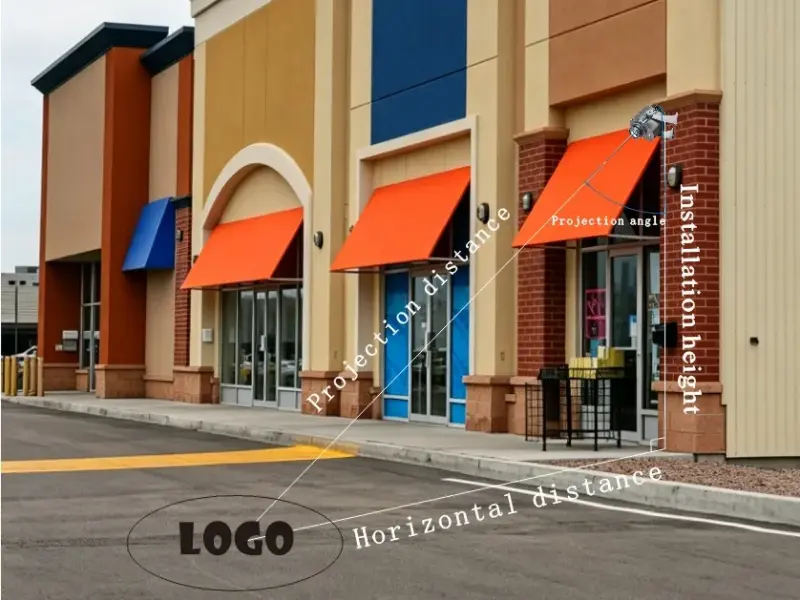
Projection distance directly affects the installation position and coverage area.
Ambient light also influences the visibility of projected content.
The projection surface should be evaluated before equipment installation.
Ground texture, color, and surrounding lighting can affect visual performance.
A suitable surface helps maintain clear and attractive projected images.
Visitor movement also deserves careful consideration during planning.
The sensor needs appropriate coverage for the intended interaction zone.
Installation positions should avoid unnecessary obstacles and interference.
Project contractors should therefore confirm several basic parameters before ordering equipment.
These details can help determine equipment quantity and installation requirements.
Important project information includes:
- Projection area and dimensions
- Installation height and projection distance
- Ground or wall surface conditions
- Existing outdoor lighting levels
- Expected visitor movement
- Required interactive effects
- Projection content requirements
- Number of projection zones
- Estimated equipment quantity
Projection alone creates visual content, but sensing adds interaction.
The sensor detects movement within the designated interactive area.
The system then triggers the corresponding visual effect.
How Interactive Sensors Make Projection Come Alive
A simple interaction can therefore follow this sequence:
Visitor movement → Motion detection → Visual response
Someone walks into the projection area and the scene changes.
Another person moves nearby and a different effect may appear.
Multiple visitors can create a more dynamic visual experience.
For contractors, sensor positioning is an important part of system planning.
The detection area should match the intended projection area.
Testing during installation can help optimize the interaction experience.
Interactive Content Can Change with the Project
Outdoor lighting projects often remain in operation for many years.
Interactive content can help maintain visual freshness during long-term operation.
Spring scenes could focus on flowers, leaves, and natural growth.
Summer content might use water, waves, or bright tropical elements.
Autumn scenes can introduce falling leaves and warmer visual themes.
Winter content could feature snow, stars, or other seasonal effects.
Project operators can also create content for special events.
This approach provides greater flexibility than permanent physical decorations.
The projection hardware can remain while the visual experience changes.
Scaling from One Projection Zone to Multiple Areas
A project does not always need a large interactive system from the beginning.
One projection zone can serve as the initial interactive attraction.
Additional zones can be added when the project expands.
Several walkways can use different interactive themes across one outdoor space.
A larger plaza can combine multiple projection areas into one experience.
Different zones can also create a continuous interactive route for visitors.
This modular approach can simplify project planning and phased installation.
Contractors can adjust equipment quantities according to actual project requirements.
The final system can grow together with the overall outdoor lighting project.
What Outdoor Lighting Contractors Should Prepare
Every outdoor installation has different site conditions.
A practical solution should therefore begin with accurate project information.
Contractors can prepare basic site details before discussing equipment selection.
Photos, drawings, dimensions, and installation positions can make communication easier.
The following information is particularly useful:
Site dimensions
Provide the length and width of the intended projection area.
Projection distance
Confirm the available distance between the equipment and projection surface.
Installation position
Indicate whether the projector will be mounted on poles, structures, or other locations.
Environmental conditions
Describe outdoor exposure, surrounding lighting, and possible installation obstacles.
Interactive requirements
Explain how visitors should interact with the projected content.
Content requirements
Share preferred themes, visual references, or existing design concepts.
Project quantity
Estimate the number of projection zones and expected equipment volume.
These details allow the supplier to better understand the project.
They can also help contractors evaluate installation feasibility before final deployment.
A Flexible Solution for Outdoor Interactive Experiences
Interactive projection can be adapted to different outdoor lighting concepts.
The hardware provides the projection foundation for interactive visual experiences.
Content and sensor configuration can then be adjusted for each project.
Contractors may also require customized appearance or branding.
OEM and ODM cooperation can support different project and market requirements.
Customized solutions can be discussed according to project scale and application needs.
Such flexibility is valuable for contractors handling different outdoor installations.
A single projection platform can support various creative directions.
The final experience can therefore reflect the character of each project.
From Project Planning to Installation Support
Outdoor projection projects require coordination between design and installation.
Equipment selection is only one part of the overall process.
Aladdin Gobo has more than ten years of projection lighting experience.
The company provides projection products and technical support for project applications.
Contractors can discuss site conditions before finalizing the installation approach.
Project consultation can cover projection areas, installation positions, and interactive requirements.
Technical guidance can also help teams prepare for installation and commissioning.
For larger projects, communication becomes especially important during implementation.
Clear technical information can help reduce installation issues and unnecessary adjustments.
Create More Interactive Outdoor Lighting Experiences
The Shenzhen Talent Park experience demonstrates the potential of interactive projection.
Projection can transform an ordinary outdoor surface into an active visual environment.
The concept is not limited to one park or one visual theme.
It can be adapted for outdoor lighting projects with different spaces and requirements.
A walkway can become a path of moving flowers.
A plaza can respond to footsteps with expanding ripples.
An open landscape can become a digital natural environment.
For outdoor lighting contractors, this creates a practical opportunity.
Interactive projection can add visual interaction without completely redesigning the existing landscape.
If you are planning an outdoor interactive lighting project, share your basic site information.
Projection dimensions, installation distance, environment, and required effects are a good starting point.
The right configuration can then be developed around your project’s actual conditions.
