
In the realm of industrial lighting, industrial projection lights have long transcended their basic function of simple illumination. Today, they serve multifaceted roles, including safety warnings, brand identification, and informational guidance. Their applications span a wide range—from safety alerts in heavy-duty workshops, to zoning in warehouse logistics, and dynamic displays in outdoor advertising. The selection of the appropriate voltage for industrial projection lights is the critical first step that determines whether these devices can operate stably and adapt effectively to the specific environment. This article offers a systematic breakdown of industrial projection light voltage categories, application scenarios, and key purchasing considerations, helping you quickly identify the most suitable solution for your needs.
I. Standard Mains Voltage Scenarios: Wide Voltage Input is the Mainstream
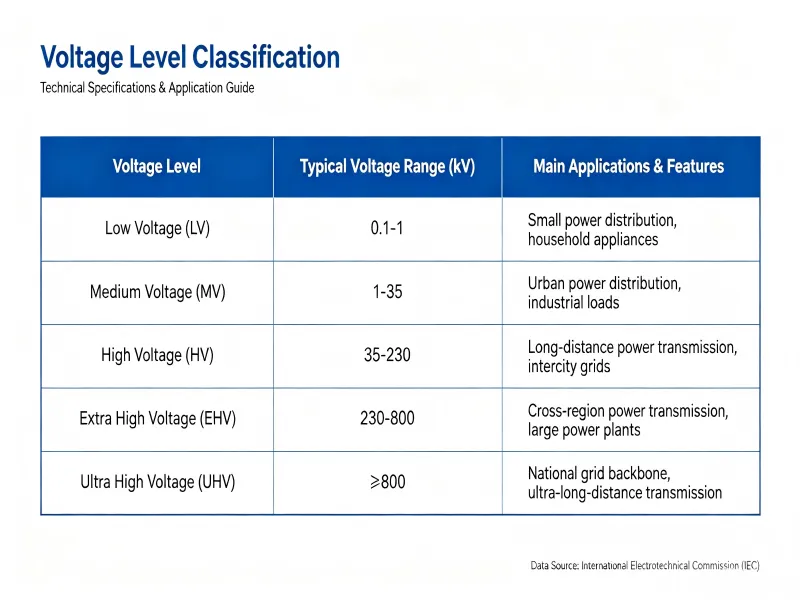
In environments with standard mains power—such as factory workshops, substations, and sports venues—the input voltage for industrial projection lights is typically designed around AC 220V (or 110V). However, most products do not operate directly at 220V. Instead, the vast majority incorporate high-quality internal power supplies that convert AC mains voltage to low-voltage DC (typically 24–36V) to power the LED light source. This design enhances both safety and energy efficiency. Many products explicitly state that “internal voltage is below 36V for safety,” reflecting a general principle in industrial projection light design.
Today, wide voltage input has become a standard feature. Most models on the market support a broad voltage range, such as AC 86–265V or 100–240V. This allows the lights to automatically adapt to different national and regional grid standards (e.g., 220V in China, 110V in Japan, 230V in Europe), making them particularly useful for export equipment or multinational operations. Some high-end industrial projection lights even support an ultra-wide input range of AC 185–528V, effectively handling voltage fluctuations common in industrial grids and ensuring stable performance even in harsh power environments.
II. Industrial High-Voltage Scenarios: Direct 380V Power Supply Solutions
For high-power industrial projection lights (e.g., 400W, 600W, or higher), direct AC 380V industrial power supply is often the preferred option. 380V operation reduces line current and minimizes transmission losses, making it ideal for long-distance cabling and high-power loads.
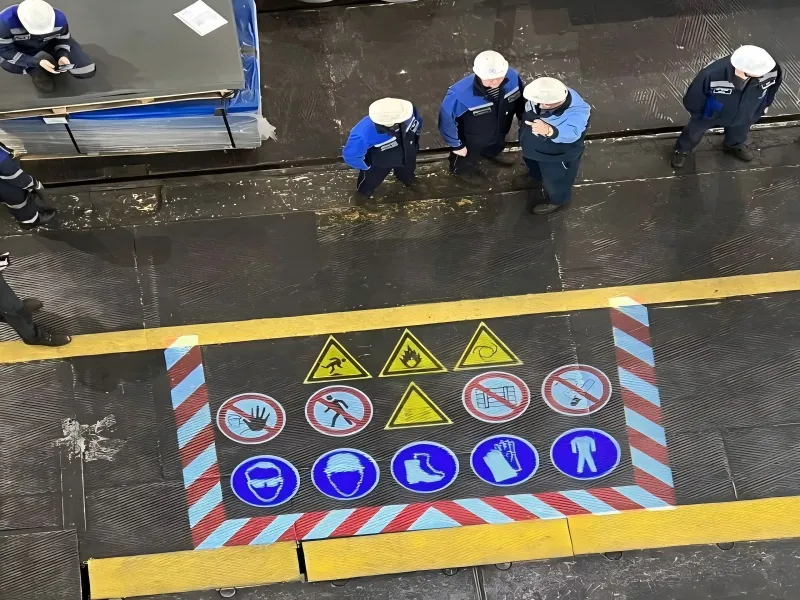
Real-world procurement requirements reflect this demand. For example, some steel enterprises have issued tender specifications clearly stating: “Projection light specifications: Power 400W, Voltage 380V, Installation height 15–20m, Projection diameter 4–5m.” These 380V industrial projection lights are commonly found in heavy industrial environments such as metallurgy, mining, and large-scale machining. Additionally, some 600W high-power models are offered with both AC 380V and 100–240V versions, giving customers flexibility. In such applications, resistance to surge voltages, corrosion, and vibration is particularly critical.
III. Special Scenarios: Low-Voltage DC and Mobile Applications
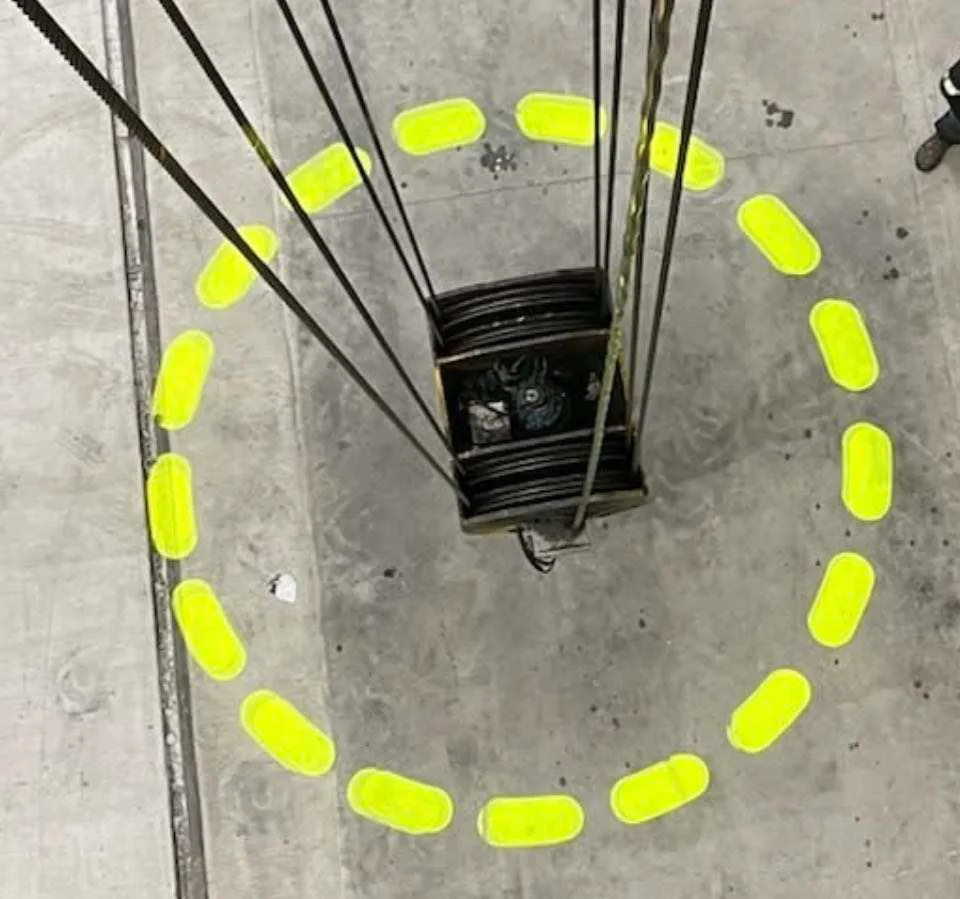
Beyond AC power, some industrial projection lights also support DC 12–80V input. These products are primarily designed for mobile vehicle applications—such as police cars, emergency rescue vehicles, and mobile food trucks—as well as for forklifts, stackers, and other industrial vehicles requiring warning projection.
Take, for instance, projection lights specifically designed for stackers. These typically have a rated voltage of DC 12–80V (with 24V recommended for optimal conversion efficiency) and projection distances ranging from 2 to 15 meters. They can be customized with virtually any pattern, shape, or color to serve as effective warning guides. Vehicle-based scenarios impose special voltage requirements—battery systems (12V/24V) can experience wide voltage fluctuations in actual operation. Therefore, projection lights that support a wide DC input range can be directly connected to the vehicle’s electrical system without the need for an additional inverter, simplifying installation and enhancing reliability.
Suitable applications: Mobile construction vehicles, police/fire truck warning systems, forklift safety guidance, and portable outdoor lighting.
IV. Key Selection Criteria: What to Consider Beyond Voltage
Once you’ve determined the appropriate voltage type, selecting an industrial projection light requires a comprehensive evaluation of several additional factors:
1. Power and Projection Distance
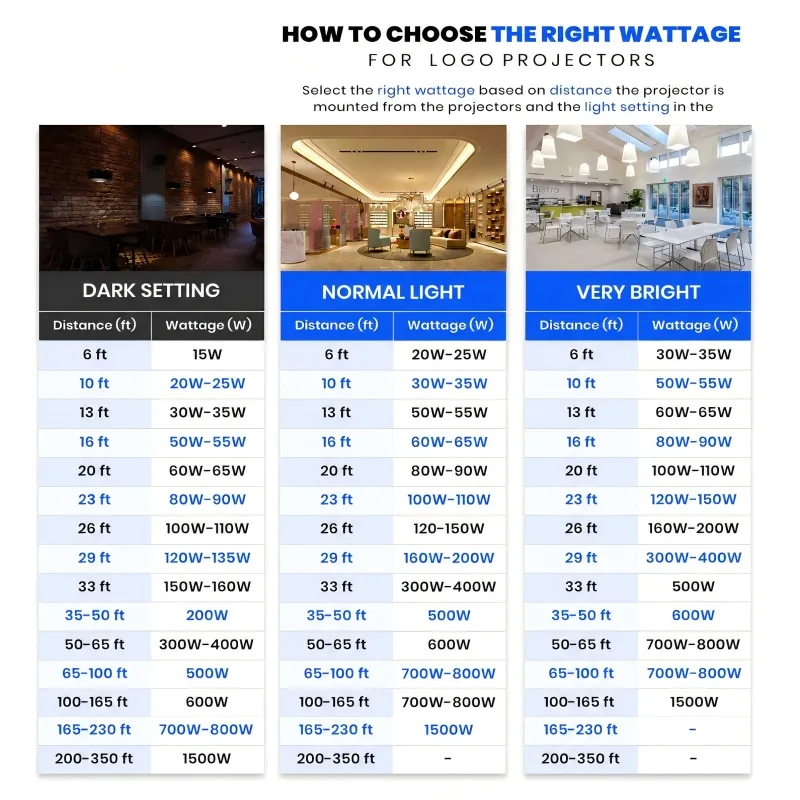
Different power ratings correspond to different projection distances, ranging from a few meters up to 150 meters. For example, a 400W projection light can meet the needs of installations at heights of 15–20 meters. The required power also depends on ambient brightness—lower power may suffice in darker environments, while brighter conditions demand higher output.
2. Ingress Protection (IP) Rating
Industrial environments are harsh, with dust, moisture, and vibration being common challenges. An IP65 rating or higher is the minimum requirement, with some products achieving IP67 or even greater protection. For high-dust environments (e.g., metallurgical workshops), special attention must be paid to heat sink design—a fin spacing of at least 5mm is recommended to prevent dust accumulation that can lead to overheating and failure.
3. Custom Patterns and Optical Configuration
Modern industrial projection lights support custom graphics, manual or motorized focusing, and optional beam angles (e.g., 10°, 15°, 55°, 95°, etc.) to meet diverse marking needs. Recently, some manufacturers have introduced intelligent projection lights based on Micro LED technology, enabling pixel-level pattern control and remote management.
4. Light Source Lifespan and Thermal Management
High-quality industrial projection lights feature aluminum alloy housings and all-glass lenses, with LED source lifetimes exceeding 50,000 hours. Effective thermal design is critical for long-term stability. In industrial settings, prioritize products with large-fin-spacing external heat sinks, reinforced double-screw mounting brackets, and safety cables to prevent accidental falls.
V. Frequently Asked Questions
Q: What is the difference between industrial projection lights and commercial projection lights?
A: Industrial projection lights are designed to deliver significantly higher brightness (often tens of thousands of lumens), operate across wider temperature ranges (–40°C to +60°C), offer superior ingress protection (IP65 and above), and sustain much longer continuous operating lifetimes (typically 50,000+ hours). Standard commercial projectors generally cannot meet these demanding industrial requirements.
Q: Can a 380V industrial projection light be directly connected to a factory power grid?
A: Yes. 380V industrial projection lights are specifically designed for industrial power systems and can be directly connected to a three-phase four-wire 380V grid. However, installation must be performed by a qualified electrician to ensure proper wiring and safe grounding.
Q: What voltage considerations apply to vehicle-mounted projection lights?
A: Vehicle power systems experience significant voltage fluctuations—12V/24V systems can output anywhere from 9V to 30V in practice. It is advisable to choose projection lights that support a wide DC input range (e.g., DC 12–80V) to avoid damage caused by voltage instability.
Q: How can I evaluate whether a projection light’s thermal design is adequate?
A: In dusty environments (such as metallurgy or cement plants), prioritize products with external heat sinks featuring fin spacing of at least 5mm. Avoid internal fine-fin heat sink designs, as dust can easily clog them, accelerating light decay and leading to premature failure.
Conclusion
There is no “one-size-fits-all” answer when it comes to selecting the voltage for industrial projection lights. The right choice depends on a comprehensive assessment of three factors: the available power supply, power requirements, and installation environment. If you face unique voltage demands—such as non-standard AC voltages (e.g., 380V) or unusual DC requirements—many professional manufacturers offer customization services to ensure perfect compatibility with your site’s electrical system. By carefully weighing these considerations, you can secure a solution that delivers reliable, long-lasting performance tailored to your specific industrial application.